

How To Set Up A Guitar Pedal Board
With so many effects and hybrid multi-furnishings guitar pedals on the market, information technology's like shooting fish in a barrel for beginners to rapidly feel overwhelmed. There is a conventional order for guitar pedals based on which furnishings ideally piece of work with a dry or candy audio signal. We'll do our best to demystify things as briefly as possible.
Choosing the Correct Pedalboard – The right dimensions to fit all your pedals
How to Power Your Guitar Pedalboard – Choosing the right ability supply
Finding the Right Footswitches – Controlling the channels on your amplifier
Connect Your Pedals with Patch Cables – Figuring out the right length and space
Define Your Guitar Pedalboard Lodge – A suggested guild of effect types and why
True Featherbed vs Buffered Bypass – A elementary explanation of different bypass types
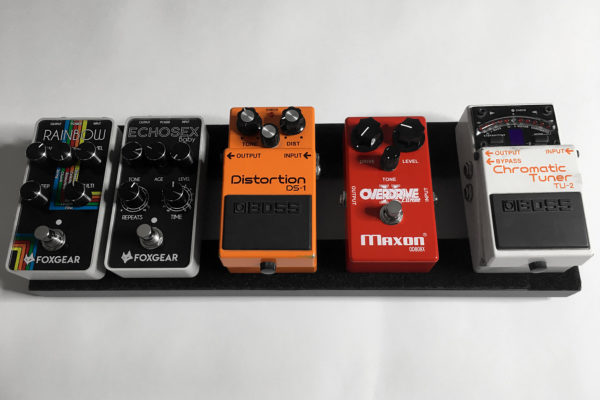
The Most Important Rule is There Are No Rules
While many guitarists place pedals in a conventional style, there are no set rules. Just remember that when you have multiple furnishings engaged, the pedals closer to the end of the chain will filter the entire sound before it. The most of import thing is to be creative and observe the sound that inspires you. If that ways y'all assemble your pedals in an unusual order, nobody tin can tell y'all you're wrong.
Your Guitar Pedalboard Prepare-up – Getting Started
The guitar pedal market has exploded in contempo years, saturating the market with options galore for every piece you could apply for your pedal board setup. With so many options, it'south important to know what to await for and do your research.
Choosing the Right Pedalboard
If you're like the average guitarist, pedals probably find their way on and off your board. It'south important to know when building a guitar pedalboard how many pedals yous need, betwixt those you currently have and perchance some you expect to become in the future. Pedalboards come in many different shapes and sizes to accommodate large and small-scale setups. One helpful resource is the Pedaltrain Pedalboard Planner. You can select from popular pedals and the different size boards Pedaltrain offers to see how they fit.
The market also offers many configuration options. Some pedalboards will have minor holes to hide your cables discreetly underneath the lath similar the Templeboards Duo Series, or several horizontal strips like the Pedaltrain Classic. Another option is to take a switcher congenital into the pedalboard like the Voodoo Lab Dingbat, which helps you plan multiple pedal paths and combinations with a single switch. For those with a very large pedal setup, the Vertex Travel Plus includes a riser to add an additional level to your pedalboard without occupying more floor infinite. With this option you volition lose the power to engage some furnishings, and so these are likely pedals that will ever be engaged, or activated using a switcher.
Pedalboard Sizes – Powerful vs. Portable
The size of your pedalboard will be determined by the number of pedals you take, and also how yous want to use it. If you're somebody who is doing lots of gigging and carrying your equipment around all the time, chances are you volition want the about portable solution, which favors smaller, lightweight options. If you generally play and record at domicile, chances are greater that you honey having your "space station", and a more robust pedal lath with all the bells and whistles may be what most inspires your inventiveness.
How to Ability Your Guitar Pedalboard
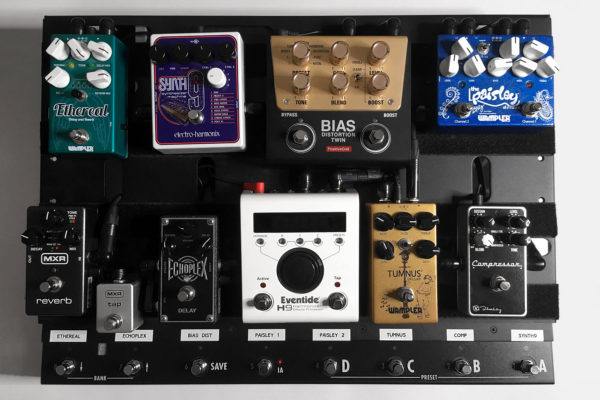
Each guitar pedal will require power to operate. Most pedals will accept a DC output which gets powered through a power supply. There are many options on the market, but you want to brand sure your power supply has enough outputs to power the pedals on your board, and with the correct voltage required for that pedal. It may not e'er be the near platonic solution, but it's sometimes necessary to apply a Daisy Chain Extension Cord from the same power source to various pedals.
The reason information technology's platonic to use a designated power supply rather than merely plugging directly into a wall is that a ability supply tin can help isolate your pedals from interference and boosted noise. Power pedals run on DC (direct current), while Air conditioning (alternating current) is the power that comes from our walls. Some pedals will come with "wall warts" that will transform AC into DC voltage and amperage, like 9 volts. Be mindful of the milliamps (mA) that your pedals require so y'all use the right output on your power supply. Usually pedals are 100mA or below, but those higher would need a designated output with higher amperage to be powered.
Finding the Right Footswitches
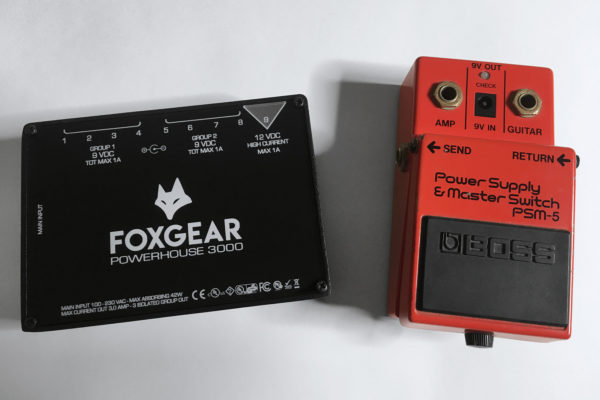
For amps that take multiple channels, you may want to relieve room on your lath for a footswitch. Some amps come with their own, merely Hosa also makes TRS Footswitches that will work with most amplifiers and are economic in space.
Connect Your Pedals with Patch Cables
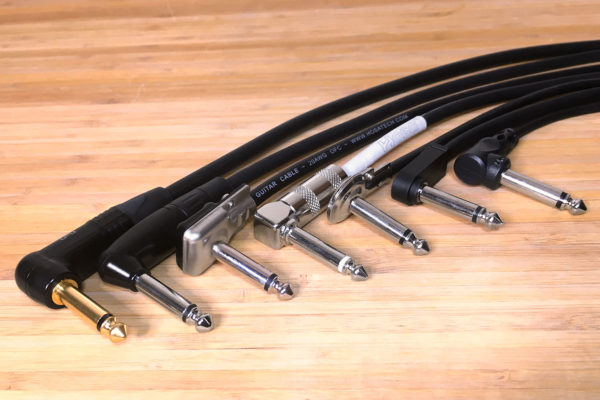
One matter you learn rapidly is that cables accept upward a decent amount of real estate on a pedalboard. Each pedal has either side mounted or top mounted inputs and outputs that will influence both where they are placed on your lath and what types of guitar patch cables are needed. For pedals connected right next to one some other, vi" cables work all-time, but ofttimes you will need 12", eighteen", or 24" patch cables to connect pedals around your board.
Equally each pedalboard has unique requirements, Hosa currently offers 7 variations of guitar patch cables. Hosa's assortment provides players with nearly every pick they could need, including variations in length, space-savings, and sonic integrity.
Pedal couplers are besides another option, though these are not cracking solutions for pedals that will exist stepped on. This solution can damage the coupler or the jack on your pedals over fourth dimension every bit jacks are never truly aligned perfectly and applying weight with your pes will add stress. If you lot employ these, make sure they are for pedals that will e'er remain on and may be engaged with a loop switcher.
Define Your Guitar Pedalboard Order
When it comes to your sound, there is no exact scientific discipline to follow, merely below is a common club of effects based on how each will modify the betoken before it.
-
1. Tuner
- The best place for your tuner is right at the start of your chain. That's because when you melody, you want the purest point directly from your guitar. If a pedal were to exist before it, the signal might be manipulated or degraded and tuning becomes inconsistent. Most tuners also mute anything later it in the chain when it'southward engaged.
-
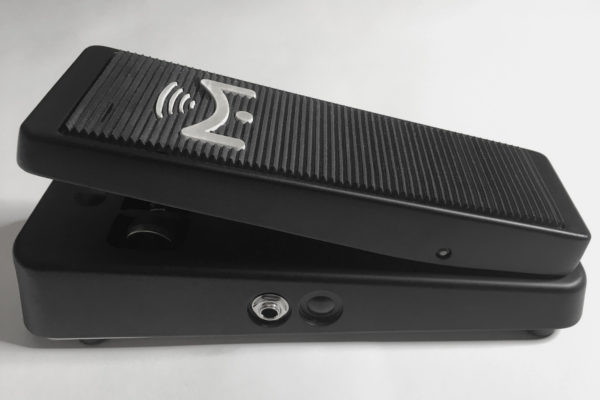
2. Filters
- The about common filter is a wah pedal. These work well earlier in the chain to manipulate the raw sound of your guitar to then add textures with other effects afterwards in the chain.
-
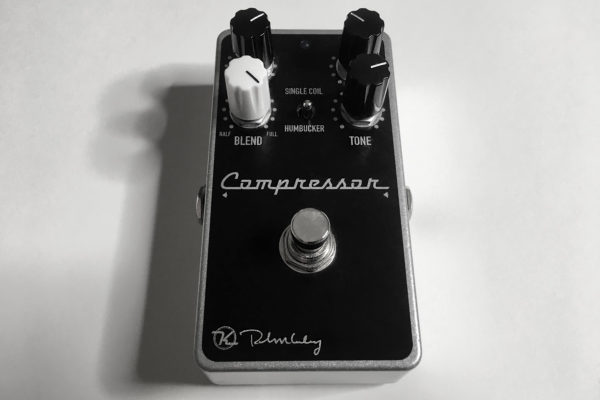
3. Compressors
- Compression will add fullness to your sound. Information technology can besides help your playing sound more dynamically consistent, such as lite and heavy strumming having a similar assault.
-
4. Pitch Shifters
- These are furnishings like octavers, arpeggiators, and anything that changes the pitch of the notes you play. You likely want these earlier whatsoever blazon of gain since a clean indicate gets a more accurate representation of that pitch.
-
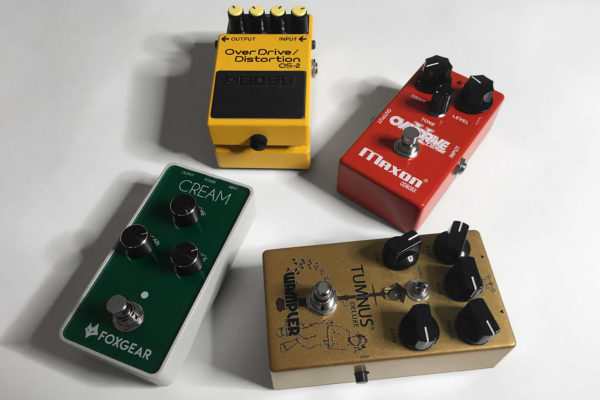
five. Overdrives
- Probably the most common outcome on any pedalboard, overdrives heave the signal from your guitar into the amplifier, which is why they are ofttimes called "boost pedals". These are used to add some grit to clean sounds or tighten the low end on high gain amplifiers since they emphasize the midrange, and the guitar is a midrange instrument.
-
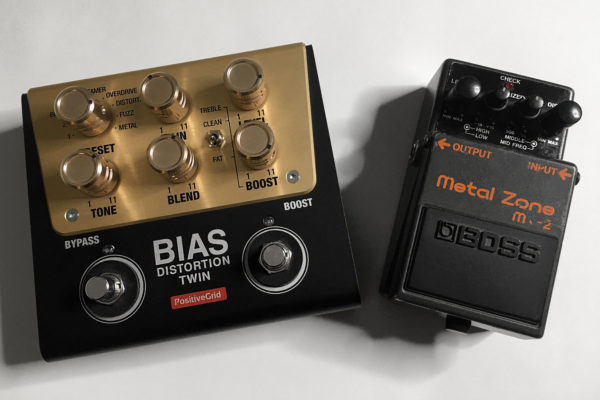
6. Gain
- Distortion and fuzz pedals add together compression and "dirt", giving the sound a harder edge that is quintessential for rock and metal-style playing.
-
7. EQ
- This is a hard guitar pedal to know where to place since it's in that location to refine a audio, either to emphasize or minimize a certain frequency. Some players EQ the raw sound coming out of their guitars, others put information technology hither subsequently distortions, which tin create harshness in certain frequencies that an EQ pedal will help tame.
-
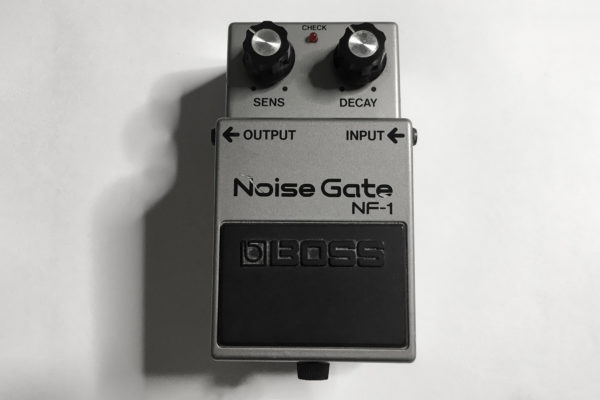
8. Noise Gates
- These can likewise go several places in the chain depending on where the nigh racket is generated that you want to control. Often noise gates are added after the gain phase, since increasing the gain besides increases racket and distortions that not all players find pleasant, especially if they want a tight, articulated audio.
-
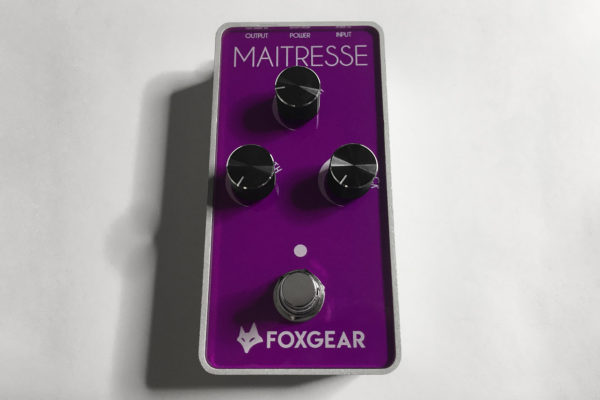
9. Modulation
- These furnishings include phasers, flangers, chorus, tremolo, and vibrato. You would almost ofttimes utilize these to modulate the entire audio upwardly to this point.
-
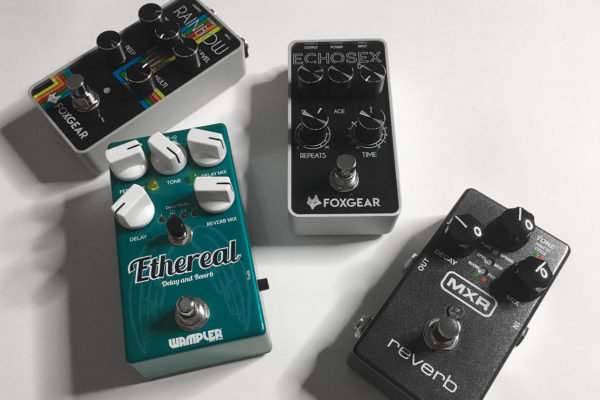
10. Time-based
- At that place is some contend among players as to whether the filibuster or reverb pedal should go outset, simply in most instances reverb goes after the delay. These pedals help requite the listener an impression of the environs everything is being played in. Less reverb and delay makes things audio more than focused, while lots of reverb and delay gives the listener the impression of a larger infinite and sound phase.
-
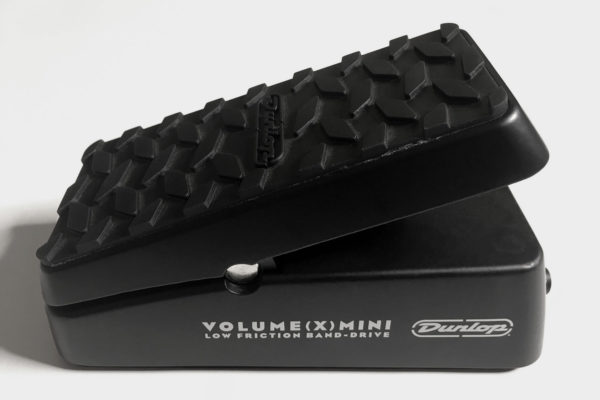
11. Volume
- Some people also adopt to have the volume pedal in the commencement of their chain, meaning if they exercise volume swells, time based-furnishings similar reverb and delay will give a more spacious, ambient trail effect. At the end of your chain, the book pedal will placidity or silence everything immediately.
True Bypass vs Buffered Bypass
If you're researching pedals, these are terms you have encountered many times. A truthful bypass pedal means that when it is disengaged, the bespeak passes through the pedal unaffected. While that doesn't color your sound, it extends the run of cable through your board, which tin sometimes lead to signal deposition. Buffered bypass pedals boost the signal even when disengaged, allowing for you to accept longer cablevision runs without the indicate strength degrading, though this will come with some form of coloration to the audio.
Modify is Inevitable
Each year there are more and more new pedal options and manufacturers. Chances are you lot will get through different pedals and boards trying to discover the correct fit for y'all, or maybe it'southward just fun to experiment with all the sounds and options out in that location. In either case, just as innovation and evolution are the norm in the pedal globe, so should it exist in your creativity. Experiment and bonfire your ain path.
If you desire more information on the different patch cable styles Hosa offers, please visit the Guitar Patch Cables page on our website. With options from pancake fashion connectors to 18-carat Neutrik tips, Hosa's array has what you need to best fit the type of board you're making, on any budget.
- Hosa

How To Set Up A Guitar Pedal Board,
Source: https://hosatech.com/press-release/how-to-set-up-a-guitar-pedalboard/
Posted by: humphreyvich1961.blogspot.com
0 Response to "How To Set Up A Guitar Pedal Board"
Post a Comment